Understanding the Importance of Early Childhood Development and Early Intervention
The Early Years Matter: Understanding the Importance of Early Childhood Development and Early Intervention
Building a strong foundation for a child’s emotional, psychological and behavioural well-being.
Childhood is more than a period of physical growth. It is a crucial stage during which the foundations of thinking, learning, communication, emotional regulation and social interaction begin to develop.
From the first interactions with caregivers to the development of language, play and social relationships, every experience contributes to how a child understands and responds to the world around them.
Early childhood, particularly the first five years, is a period of significant brain development. During this time, children gradually develop the skills that influence their future learning, relationships, independence and overall well-being.
Understanding this development from a psychological and behavioural perspective helps parents recognise the importance of providing the right support at the right time.
Understanding Early Childhood Development from a Psychological Perspective
Psychological development involves much more than intelligence or academic readiness. It includes the development of emotional, cognitive, social and adaptive abilities.
Some important areas include:
1. Cognitive Development
Children gradually develop the ability to think, understand, remember, solve problems and make connections. Skills such as attention, memory, imitation and problem-solving form the foundation for future learning.
2. Emotional Development
Young children are still learning to identify, understand and express their emotions. They gradually develop emotional regulation, frustration tolerance and the ability to cope with changes and unfamiliar situations.
3. Social Development
Through everyday interactions, children learn to share attention, take turns, understand social cues, develop relationships and participate in group activities.
4. Self-Regulation and Independence
The ability to wait, follow instructions, manage impulses and complete everyday activities develops gradually. These skills are essential for participation at home, in school and within the wider community.
These developmental areas are interconnected. Difficulties in one area may influence how a child participates and progresses in others.
Understanding Development from a Behavioural Perspective
Behaviour is an important part of a child’s development. It is one of the ways children interact with their surroundings, communicate their needs and learn from everyday experiences.
From a behavioural perspective, children’s actions are influenced by their environment, learning history, interactions and the consequences that follow their behaviour.
For example:
► A child who struggles to communicate may cry or become frustrated when unable to express a need.
► A child who finds an activity difficult may avoid it or refuse to participate.
► A child who receives attention following a particular behaviour may learn to repeat it.
► A child who receives consistent encouragement for appropriate behaviour may become more likely to demonstrate that behaviour again.
Understanding these patterns allows parents and professionals to look beyond the behaviour itself and identify the skills a child may need to develop.
Rather than focusing only on reducing challenging behaviours, behavioural support also aims to teach meaningful alternatives, including communication, cooperation, waiting, flexibility and independence.
Why Is Early Intervention Important?
Early intervention refers to identifying developmental concerns and providing appropriate support as early as possible.
Children develop at different rates, and not every developmental difference indicates a difficulty. However, when concerns are persistent or affect everyday functioning, seeking professional guidance can help clarify a child’s needs.
Early intervention is important because:
1. It Supports Developing Skills
Young children have many opportunities to learn through play, interaction and everyday experiences. Early support can help strengthen emerging abilities across different developmental areas.
2. It Addresses Difficulties Before They Become More Complex
When developmental challenges are identified early, professionals can work on the underlying skills contributing to those difficulties rather than waiting for them to affect more areas of daily life.
3. It Builds Communication and Social Abilities
Early support can help children develop ways to express their needs, interact with others, respond to social situations and participate more meaningfully in their environment.
4. It Encourages Emotional and Behavioural Regulation
Children can gradually learn to manage frustration, tolerate waiting, adapt to changes and respond to everyday expectations with appropriate support.
5. It Promotes Independence
Skills such as following instructions, completing simple tasks, participating in routines and developing self-help abilities contribute to a child’s growing independence.
The Role of Parents in Early Childhood Development
Professional intervention is valuable, but a child’s development does not happen only inside a therapy room.
The home environment plays an equally important role. Everyday experiences such as talking, playing, reading, eating together and following routines provide meaningful opportunities for learning.
Parents can support development by:
⇒ Engaging in regular play and interaction.
⇒ Encouraging children to communicate their needs in different ways.
⇒ Providing opportunities to make simple choices.
⇒ Maintaining predictable routines while allowing flexibility.
⇒ Acknowledging positive efforts and encouraging appropriate behaviours.
⇒ Giving children opportunities to explore, learn and practise new skills.
⇒ Seeking professional guidance when developmental concerns arise.
Consistency between home and therapy environments helps children practise and generalise the skills they learn.
Early Intervention Is Not About Labels. It Is About Opportunities.
One of the biggest misconceptions surrounding early intervention is that seeking professional support means something is wrong with a child.
In reality, early intervention is about understanding a child’s individual developmental profile, recognising areas that may need additional support and creating opportunities for progress.
Every child has strengths, individual needs and a unique developmental journey. The purpose of intervention is not to compare children or force them to meet every milestone at the same time. It is to help each child develop meaningful skills that improve their participation, independence and quality of life.
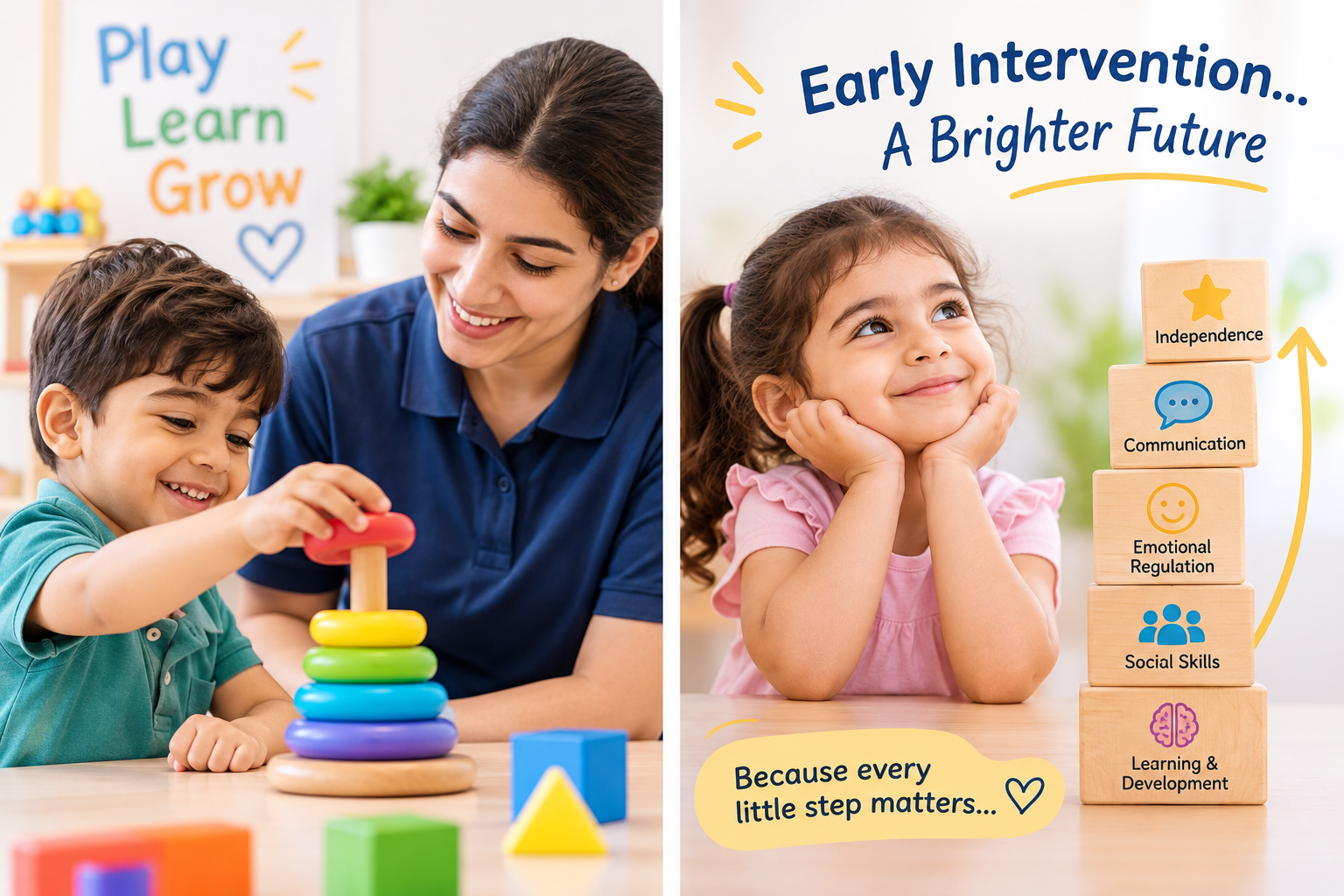
Every Little Step Matters
The early years provide an important foundation for a child’s future. The way children communicate, interact, learn, regulate emotions and respond to their environment develops through countless small experiences.
Recognising developmental needs early, providing appropriate support and involving families in the process can make a meaningful difference.
At Al Najma Rehabilitation Center LLC, we believe that every child deserves the opportunity to learn, grow and reach their potential. Through individualised developmental and therapeutic support, we work towards building meaningful skills that extend beyond the therapy room and into everyday life.
Because early support is not about changing who a child is. It is about helping them develop the skills to navigate their world with greater confidence and independence.
Care Beyond Boundaries.