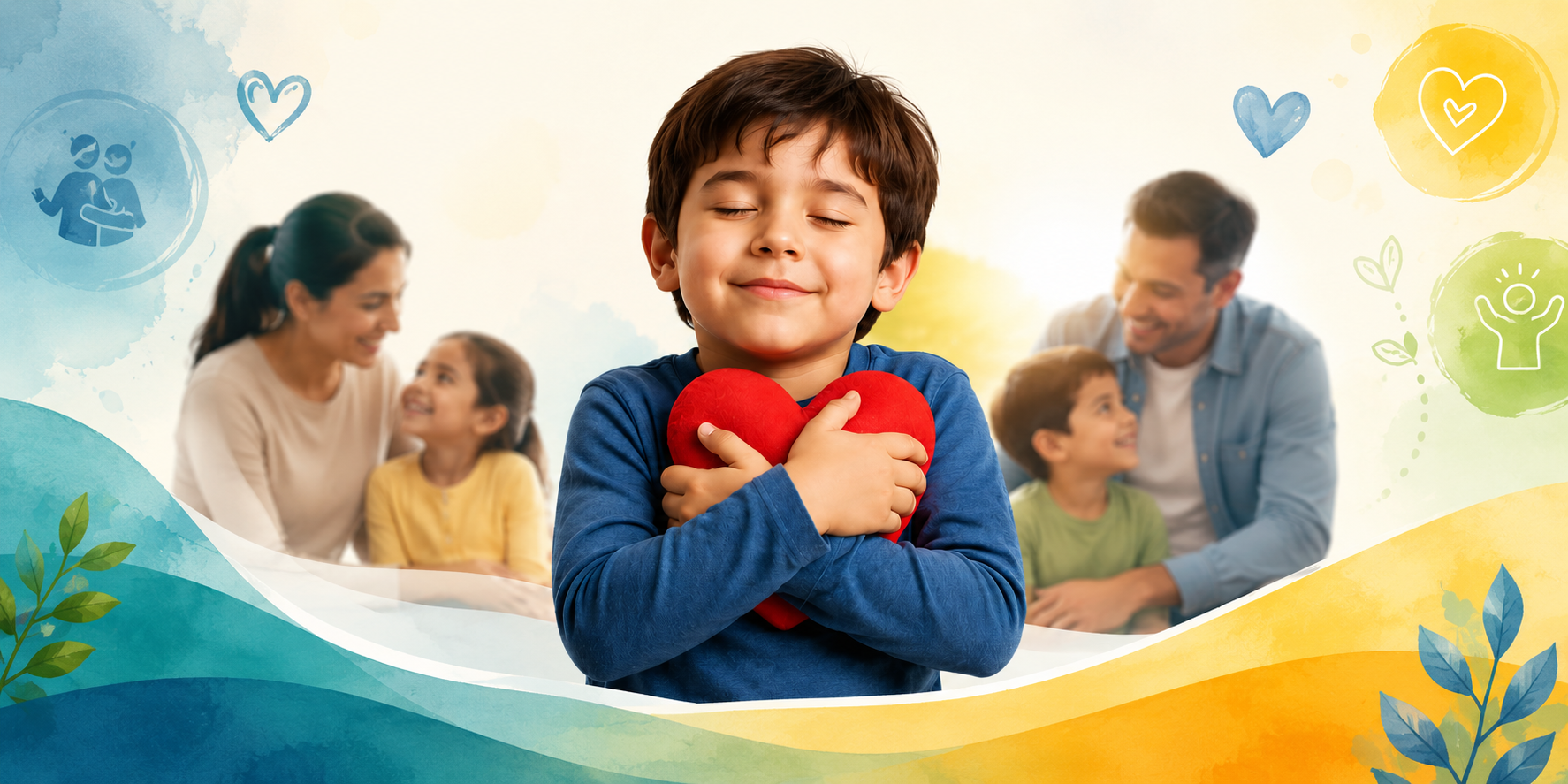
Building Emotional Strength in Children: Why It Matters More Than Ever
Every child experiences emotions — happiness, frustration, fear, excitement, disappointment, and joy. But emotional strength is not about avoiding difficult emotions. It is about helping children understand their feelings, express themselves safely, and recover from challenges with confidence and support. Emotional resilience does not develop overnight. It grows gradually through everyday experiences, loving relationships, safe environments, and supportive guidance from parents, teachers, and therapists. When children feel emotionally secure, they become more confident in handling stress, adapting to changes, communicating their needs, and building healthy relationships.
At Al Najma Center, we believe emotional development is just as important as academic and physical growth. Supporting emotional strength during childhood can positively influence a child’s behavior, learning, social interaction, and overall well-being.
1. Encourage Children to Name Their Emotions
Many children experience strong emotions but may not know how to express them. Instead of saying “Don’t cry” or “Stop being angry,” helping children identify and label their emotions can make a huge difference.
When children learn words like “sad,” “worried,” “frustrated,” “excited,” or “nervous,” they begin to understand what they are feeling. This helps reduce emotional overwhelm and improves communication skills. Children who can recognize emotions are often better able to regulate them over time.
Simple conversations like:
⇒ “You seem upset today.”
⇒ “Are you feeling nervous?”
⇒ “It’s okay to feel disappointed.”
can help children feel understood and emotionally supported.
2. Create a Safe and Predictable Routine
Children thrive in environments where they feel secure and know what to expect. Predictable routines provide emotional comfort and stability, especially for children who struggle with anxiety, emotional regulation, or behavioral difficulties.
Daily routines such as:
⇒ Consistent sleep schedules
⇒ Regular mealtimes
⇒ Study and homework routines
⇒ Play and relaxation time
help children feel more balanced and emotionally organized.
A structured environment does not mean being overly strict — it simply helps children feel safe and emotionally grounded.
3. Encourage Children to Ask for Help
Some children hesitate to ask for support because they fear being judged, corrected, or misunderstood. Teaching children that asking for help is a sign of strength can improve their confidence and emotional well-being.
When children know they can approach trusted adults for guidance, they become more comfortable expressing worries, fears, or difficulties. Whether support comes from parents, teachers, therapists, or caregivers, feeling emotionally supported helps children build resilience.
Children who learn to seek help appropriately are often better prepared to manage future challenges independently.
4. Build Open Communication and Trust
Children need safe spaces where they feel heard without fear of criticism. Sometimes they do not need immediate solutions — they simply need someone who listens calmly and patiently.
Open communication helps children:
⇒ Express emotions safely
⇒ Share fears and worries
⇒ Develop trust in relationships
⇒ Improve emotional awareness
Small daily conversations can strengthen emotional connection:
⇒ “How was your day?”
⇒ “What made you happy today?”
⇒ “Was anything difficult for you?”
When children feel emotionally accepted, they are more likely to communicate honestly and confidently.
5. Be a Role Model for Emotional Regulation
Children learn emotional responses by observing the adults around them. Parents and caregivers play a major role in teaching children how to handle stress, frustration, disappointment, and conflict.
When adults respond calmly during difficult moments, children begin to understand healthy ways to manage emotions. This does not mean adults should never feel upset — it means showing children that emotions can be handled safely and respectfully.
Simple modeling behaviors include:
⇒ Taking deep breaths when frustrated
⇒ Speaking calmly during disagreements
⇒ Expressing feelings appropriately
⇒ Problem-solving instead of reacting impulsively
Children often mirror what they consistently observe.
6. Praise Effort, Not Just Success
Children need encouragement for trying, learning, and improving — not only for achieving perfect results. Focusing only on success may create fear of failure or low confidence when mistakes happen.
Praising effort helps children develop:
⇒ Confidence
⇒ Motivation
⇒ Persistence
⇒ A growth mindset
Statements like:
⇒ “I’m proud of how hard you tried.”
⇒ “You didn’t give up.”
⇒ “You worked really well on this.”
Teach children that mistakes are part of learning and growth.
Emotional Strength Is a Lifelong Skill
Emotionally strong children are not children who never cry, struggle, or feel upset. Emotional strength means learning how to understand feelings, express emotions appropriately, adapt to challenges, and recover with support. Every supportive conversation, safe environment, encouraging word, and patient response contributes to a child’s emotional growth. By nurturing emotional resilience early in life, we help children build confidence, healthy relationships, problem-solving abilities, and emotional well-being that can support them throughout their future.
At Al Najma Center, we are committed to supporting children and families in building emotional, behavioral, and developmental strength through compassionate care and guidance.
Back to Blogs