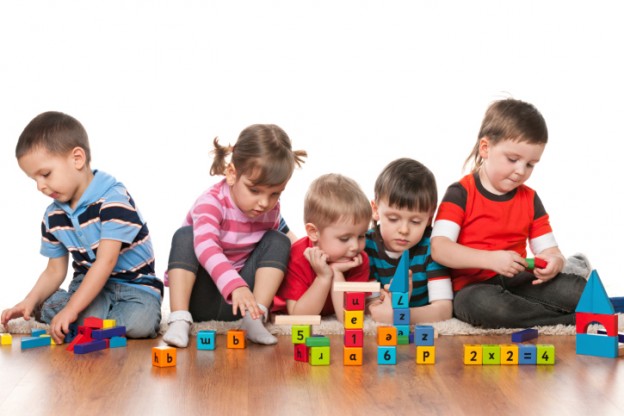
For children in special education, learning does not begin with worksheets and textbooks—it begins with play. Play is not “just fun”; it is the foundation on which academic skills are built. Through structured and purposeful play, children develop the attention, motor skills, communication, and cognitive abilities needed for academic success.
Understanding the connection between play and academics helps parents and educators support learning in a meaningful and developmentally appropriate way.
Why Play Is the First Step to Learning
Play allows children to explore, experiment, and engage without pressure. For children with developmental delays, autism, ADHD, or learning difficulties, play:
► Builds motivation and engagement
► Encourages communication and interaction
► Develops problem-solving skills
► Supports emotional regulation
Before a child can sit and learn, they must first connect, attend, and interact—all of which are nurtured through play.
Skills Developed Through Play
Play supports multiple developmental areas that directly impact academics:
🧠Cognitive Skills
→ Cause and effect
→ Memory and attention
→ Sorting, matching, and sequencing
→ Understanding concepts like size, color, and shape
✋ Motor Skills
→ Fine motor strength for writing
→ Hand-eye coordination
→ Bilateral coordination
🗣Communication Skills
→ Understanding instructions
→ Expressing needs and ideas
→ Turn-taking and social interaction
🧩Behavioral & Self-Regulation Skills
→ Following rules
→ Waiting and sharing
→ Managing transitions
These skills are essential prerequisites for academic learning.
How Play Transitions into Academic Skills
In special education, academics are introduced gradually and meaningfully by embedding learning goals into play activities.
Example Transitions:
♦ Block play → Math skills Counting blocks, comparing sizes, understanding patterns
♦ Pretend play → Language & literacy Naming objects, storytelling, sequencing events
♦ Art & craft → Pre-writing skills Strengthening grip, controlling movements, following steps
Through repetition and guided interaction, play naturally evolves into structured learning.
Play-Based Academic Strategies Used in Special Education
1. Structured Play
Activities are designed with clear learning objectives while remaining enjoyable and engaging.
2. Task Analysis
Skills are broken down into smaller, achievable steps—for example, learning to write starts with scribbling and line tracing.
3. Visual Supports
Pictures, charts, and models help children understand expectations and concepts.
4. Multisensory Learning
Children learn best when they can see, touch, hear, and move—especially those with learning difficulties.
Role of the Multidisciplinary Team
In special education settings, skill-building from play to academics is supported by a team approach:
♦ Special educators focus on academic readiness and learning goals
♦ Occupational therapistssupport fine motor and sensory needs
♦ Speech therapistsbuild communication and language skills
♦ Behavior therapistssupport attention, regulation, and engagement
Together, the team ensures that play activities lead to functional academic outcomes.
How Parents Can Support Learning Through Play at Home
Parents don’t need special materials—everyday activities can support academic development:
⇒ Sorting laundry by color or size
⇒ Counting snacks or toys
⇒ Reading picture books and talking about images
⇒ Playing turn-taking games
The key is interaction, repetition, and encouragement.
Play Is Learning
For children in special education, play is not separate from learning—it is learning. When children feel safe, engaged, and motivated through play, they are more prepared to develop academic skills.
By respecting each child’s pace and using play as a bridge, educators and parents can support meaningful, lasting academic growth.
Final Thought
When we meet children where they are and guide them step by step—from play to academics—we create a learning journey that is positive, inclusive, and effective.