Olfactory Sensory Processing
Olfactory Sensory Processing: Understanding How Children Experience Smell
An Occupational Therapist’s Perspective
Have you noticed a child refusing food because of its smell, avoiding certain environments, or frequently smelling toys, clothes, and other objects?
These behaviors may be related to olfactory sensory processing, which refers to how the nervous system detects, interprets, and responds to different smells.
Understanding Olfactory Sensory Differences
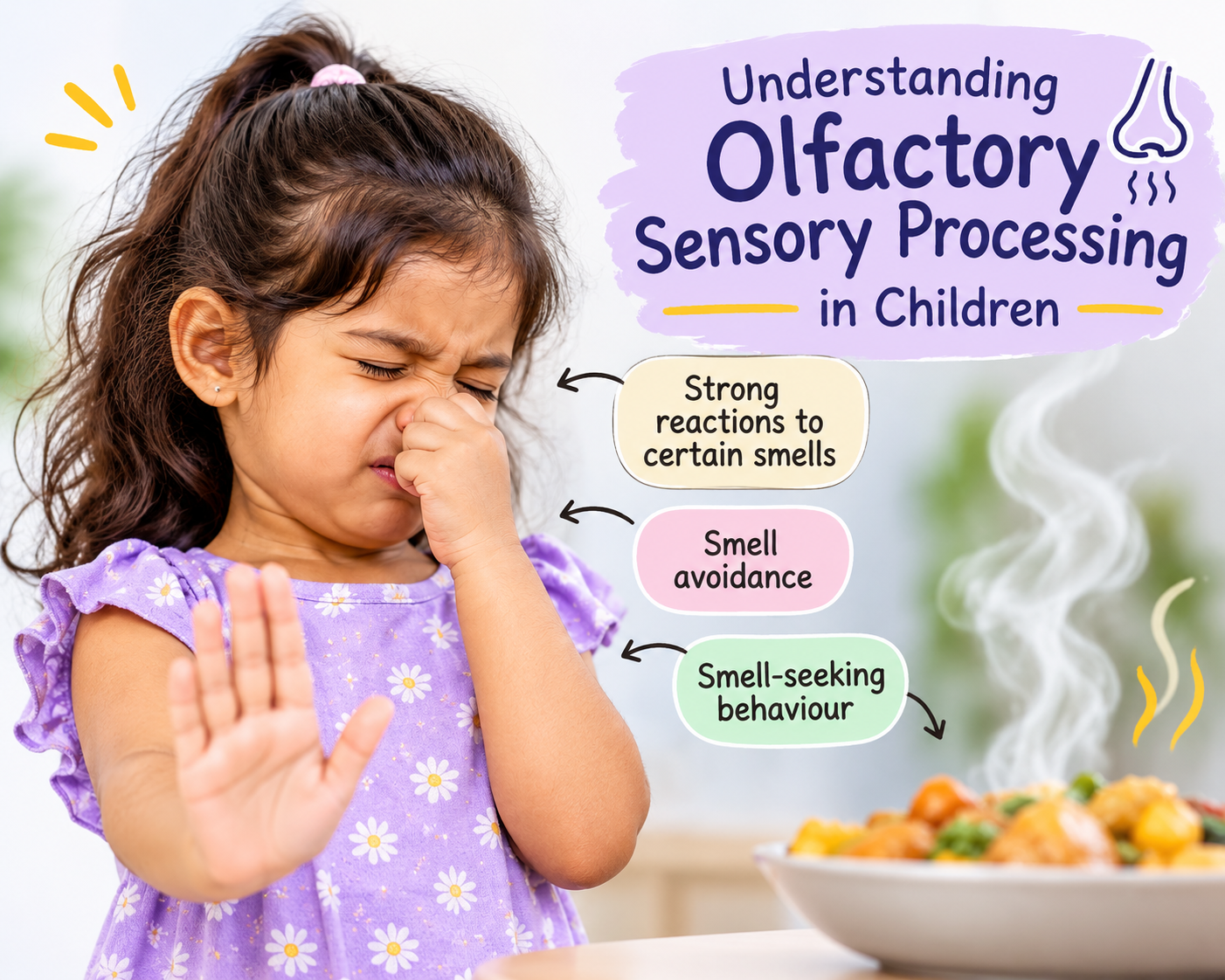
► Olfactory hypersensitivity: Strong reactions to perfumes, cooking aromas, or cleaning products. Children may gag, cover their noses, or avoid certain places.
► Olfactory under-responsivity: Showing reduced awareness of everyday smells.
► Olfactory seeking: Frequently smelling toys, clothes, food, or other objects to gain sensory input.
These differences can affect feeding, personal hygiene, play, and participation in everyday routines.
Practical Strategies for Parents and Caregivers
♦ Create a smell-friendly environment
Avoid strong perfumes, scented cleaning products, and air fresheners. Ensure good ventilation, especially during cooking.
♦ Introduce smells gradually
Begin with familiar, mild smells such as fruits or flowers. Allow the child to explore from a comfortable distance without forcing participation.
♦ Make smell exploration playful
Try a smell-matching game using familiar items such as orange peels, mint leaves, or cinnamon. Let the child choose whether to smell each item.
♦ Support feeding without pressure
Allow children to look at, touch, or explore unfamiliar foods before smelling or tasting them. Avoid forcing exposure, as this may increase aversion.
♦ Provide choices and control
Allow the child to move away from uncomfortable smells, take breaks, or choose between unscented products during self-care routines.
♦ Redirect unsafe smell-seeking
If a child frequently smells inappropriate objects, provide safe alternatives such as familiar herbs, fruits, or scented play materials, while supervising exploration.
How Can Occupational Therapy Help?
Occupational therapists identify sensory triggers, adapt environments, and develop individualized strategies to improve participation in feeding, self-care, play, and daily routines.
A Message to Parents
A child refusing food because of its smell is not necessarily being picky. A child repeatedly smelling objects may be exploring or seeking sensory input.
Instead of focusing only on stopping the behaviour, try understanding what the child is experiencing.
Our goal as occupational therapists is not to eliminate sensory differences, but to help children feel comfortable, confident, and supported in their everyday environments.
Sometimes, a small environmental change can make a big difference in a child’s participation.
Note: Persistent smell-related difficulties, significant food restriction, or sudden changes in smell perception may require additional medical or multidisciplinary assessment.
Back to Blogs