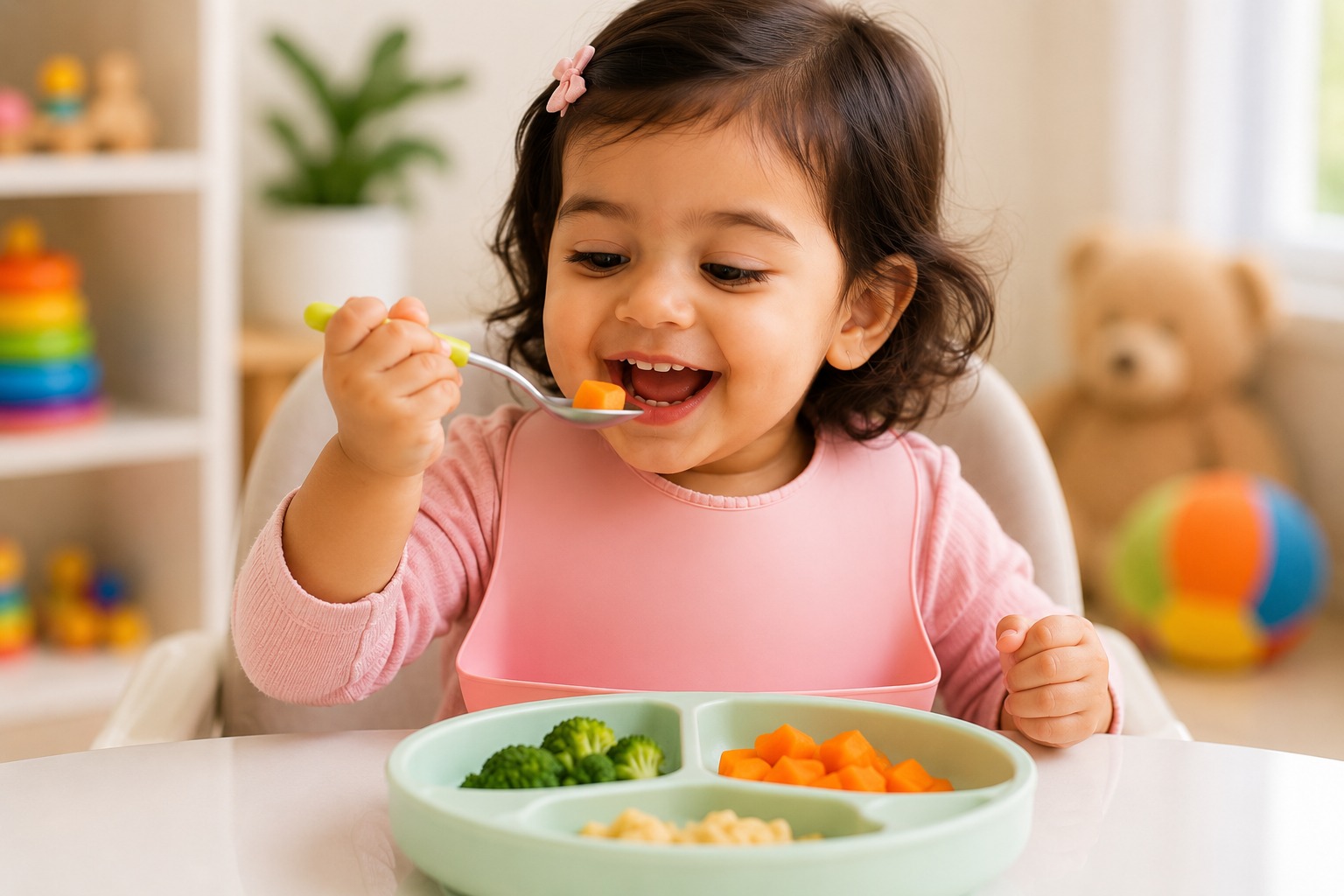
Building Self-Feeding Skills: Helping Children Grow Independent at Mealtime
Mealtime is more than just eating ... it is an important part of a child’s development. From holding a spoon to trying new textures, self-feeding helps children build independence, confidence, coordination, and sensory awareness. For some children, however, these skills do not come easily. Difficulties with self-feeding may affect daily routines, family mealtimes, and a child’s willingness to explore food.
Occupational Therapy (OT) plays an important role in helping children develop the physical, sensory, and behavioral skills needed for successful self-feeding.
What Are Self-Feeding Skills?
Self-feeding refers to a child’s ability to independently participate in eating activities. These skills begin developing during infancy and continue to improve throughout childhood.
Self-feeding includes:
♦ Holding a bottle or cup ♦ Finger feeding ♦ Using spoons and forks ♦ Scooping food ♦ Bringing food to the mouth ♦ Chewing and managing textures ♦ Sitting and attending during meals
Although these tasks may appear simple, they actually require many body systems to work together.
Skills Needed for Self-Feeding Fine Motor Skills: Children need hand strength and finger control to hold utensils, grasp food items, and manipulate objects during meals.
Bilateral Coordination:Both hands work together during eating activities... for example, one hand stabilizes the bowl while the other uses the spoon.
Hand-Eye Coordination: Children visually guide their hand movements while scooping food and bringing it to their mouth.
Postural Control:Good seated posture and core strength help children maintain stability during mealtime activities.
Sensory Processing:Children use sensory information to tolerate food textures, smells, temperatures, and different consistencies.
Attention and Regulation:Remaining seated, focusing on the meal, and managing emotions during feeding are also important components of successful self-feeding.
Signs a Child May Have Difficulty With Self-Feeding
Every child develops at their own pace, but some signs may indicate the need for additional support:
⇒ Difficulty holding utensils ⇒ Avoiding messy textures ⇒ Gagging or refusing certain foods ⇒ Poor sitting tolerance during meals ⇒ Excessive spilling or difficulty scooping ⇒ Limited interest in self-feeding ⇒ Frustration during mealtimes ⇒ Dependence on adults for feeding beyond expected age
These challenges may be related to motor coordination, sensory sensitivities, oral motor skills, or attention difficulties.
How Occupational Therapy Helps
Occupational Therapists help children develop the foundational skills needed for independent feeding in a supportive and child-friendly manner. Therapy sessions may focus on:
Improving Fine Motor Skills
Activities that strengthen the hands and fingers help children improve utensil grasp and control.
Developing Postural Stability
Core strengthening and seating support improve body control during meals.
Sensory Exploration
Children gradually learn to tolerate and explore different food textures through sensory-based activities.
Enhancing Coordination
Scooping, transferring, pouring, and hand-to-mouth activities improve motor planning and coordination.
Increasing Mealtime Participation
Therapists also work on routines, attention, sitting tolerance, and independence during meals.
Simple Activities Parents Can Try at Home
Parents can support self-feeding development through playful daily activities:
► Scooping pom-poms with spoons ► Playing with textured foods ► Finger painting or sensory play ► Using child-sized utensils ► Encouraging messy play without pressure ► Practicing seated tabletop activities ► Offering opportunities for independent attempts
The goal is not perfection... it is gradual confidence and participation.
Why Early Support Matters
Self-feeding difficulties can sometimes affect nutrition, confidence, social participation, and family routines. Early support helps children build positive mealtime experiences while improving independence and overall development.
Every small step; whether holding a spoon, touching a new texture, or sitting for a few extra minutes ...is meaningful progress.