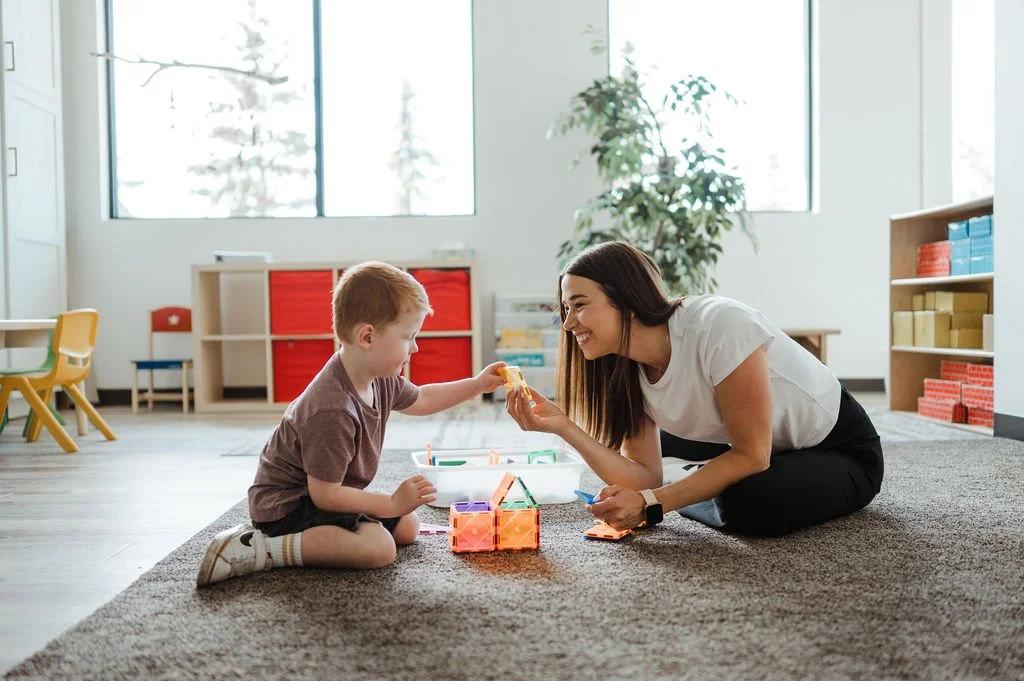
The Power of Sabotaging in Speech Therapy
The Power of Sabotaging in Speech Therapy: Building Communication Intent in Children
Introduction
Communication is much more than speaking words. It is about having a reason to communicate, expressing needs and wants, sharing ideas, gaining attention, and connecting with others. For many children with speech and language delays, one of the biggest challenges is not simply learning words but understanding how to use communication to achieve a purpose.
This is where sabotaging, also known as communication temptations or environmental arrangement, can play an important role in speech and language therapy.
In speech therapy, sabotaging involves making small, intentional changes to a child’s environment or daily activities to create natural opportunities for communication. Instead of immediately giving a child everything they want, the therapist or caregiver creates a meaningful situation in which the child has a reason to communicate.
The goal is not to frustrate the child or deliberately upset them. Rather, it is to encourage the child to initiate communication spontaneously, using whatever communication method they can manage, including gestures, eye gaze, pointing, signs, pictures, communication devices, sounds, or spoken words.
When used appropriately, sabotaging can help children discover that communication is powerful, meaningful, and useful in everyday life.
What Is Sabotaging in Speech Therapy?
Sabotaging is a strategy in which a therapist or caregiver intentionally arranges a familiar activity or situation to create a natural opportunity for a child to communicate.
For example, imagine a child who loves bubbles. During a speech therapy session, the therapist blows bubbles and then closes the bottle, waiting for the child to indicate that they want more. The child may look at the bottle, reach toward it, point, vocalize, sign “more,” or say “bubble.”
This moment creates an opportunity for the child to initiate communication.
Rather than asking the child to repeat “more bubbles” several times, the therapist creates a situation in which requesting bubbles becomes meaningful and functional.
Other examples include:
► Placing a favourite toy in a transparent, closed container.
► Offering a snack in small portions so the child has opportunities to request more.
► Giving the child a toy car but temporarily keeping the ramp or track out of reach.
► Pausing during a familiar song to encourage the child to request continuation.
► Giving the child a toy that needs assistance to operate.
These situations encourage the child to communicate because they have a genuine reason to do so.
Understanding Communication Intent
Communication intent refers to a child’s desire or motivation to communicate with another person for a particular purpose.
A child demonstrates communication intent when they attempt to influence another person’s behaviour, share an experience, express a feeling, request an object, or gain someone’s attention.
Communication intent may be demonstrated even when the child does not speak.
For example, a child may:
► Reach towards a desired toy.
► Point to a snack they want.
► Look between an adult and an object.
► Give an adult a container they cannot open.
► Pull an adult towards a preferred activity.
► Use a gesture to request help.
► Vocalize to gain attention.
► Use a word, sign, picture, or AAC device to make a request.
These behaviours can all be meaningful communication attempts, depending on the context.
The important point is that communication begins with a purpose, not necessarily with a spoken word.
Some children may have a vocabulary of several words but rarely initiate communication independently. Others may understand language well but struggle to express their needs. Some children may depend on adults to anticipate their needs, leaving them with fewer opportunities to discover the value of initiating communication.
In such situations, the therapist’s role is to create opportunities for the child to communicate independently and meaningfully.
Why Is Sabotaging Important for Developing Communication Intent?
It encourages spontaneous communication
Some children learn to answer questions or repeat words when prompted but rarely communicate on their own.
For example, when asked, “What do you want?” a child may repeat “juice” after the therapist models the word. However, the child may not independently request juice when thirsty.
Sabotaging can help create natural situations in which the child has a reason to initiate communication without waiting for an adult’s question.
The therapist might place the juice in view, pause, and wait expectantly. The child may then point, reach, vocalize, use a communication device, or say “juice.”
Over time, repeated meaningful opportunities can help the child learn that initiating communication is effective.
It teaches children that communication has a purpose
Children need to understand that communication can change what happens around them.
When a child communicates “open” and an adult opens a box, the child experiences the direct benefit of communication.
When a child requests “more” and receives another turn with a favourite activity, they learn that their communication has an effect.
This connection between communication and meaningful outcomes is important for developing functional communication skills.
The therapist should respond consistently to the child’s meaningful attempts, helping the child understand that communication works.
It increases opportunities for requesting
Requesting is one of the earliest and most practical communication functions.
Children request food, toys, help, attention, continuation of an activity, and access to preferred experiences.
Sabotaging naturally creates opportunities for requesting without turning every interaction into a formal question-and-answer task.
For example, during a toy activity, the therapist might keep some toy animals in a container. The child must communicate in some way to ask for the container to be opened or to obtain another animal.
Depending on the child’s level, the therapist may support a gesture, a picture exchange, an AAC selection, a sign, or a spoken word.
The focus is on the communicative function rather than insisting on a particular response.
It promotes independence
When adults anticipate every need and immediately provide everything a child wants, the child may have fewer reasons to initiate communication.
For instance, a caregiver may immediately give a child a favourite snack whenever the child looks at it, without allowing time for any communicative attempt.
By arranging small, supportive opportunities for communication, adults can encourage the child to take an active role in interactions.
The aim is not to make the child dependent on prompting or to require a spoken request for every need. Instead, it is to build confidence and independence in expressing wants, needs, choices, and ideas.
It develops problem-solving and help-seeking skills
Communication is not limited to requesting objects. Children also need to learn how to ask for help when they encounter a problem.
For example, a child may be given a wind-up toy that requires assistance, a box that is difficult to open, or a toy with a missing component.
The therapist can wait briefly to see whether the child communicates that they need help.
The child might hand the toy to the therapist, point, gesture, vocalize, use a sign, or say “help.”
These opportunities support functional communication and encourage the child to seek assistance rather than immediately giving up or becoming distressed.
It supports social interaction and shared engagement
Sabotaging can also create opportunities for children to interact with other people rather than focusing only on objects.
For example, the therapist may pause during a playful routine, such as rolling a ball back and forth. The pause creates an opportunity for the child to signal that they want the activity to continue.
The child may look towards the therapist, reach for the ball, gesture, vocalize, or say “again.”
Such interactions can support turn-taking, shared enjoyment, attention to a communication partner, and social reciprocity.
However, eye contact should not be demanded as a condition for receiving an item. A child can communicate meaningfully without making eye contact.
It helps generalize communication into everyday life
Children need to use communication outside the therapy room—in the home, classroom, playground, and community.
Sabotaging strategies can be incorporated into everyday routines, making communication practice natural and functional.
Parents can create opportunities during mealtimes, playtime, dressing, bath time, and book reading.
For example, during a familiar song, a parent can pause before the final word or action. The child may gesture, vocalize, use AAC, or say the missing word to indicate that they want the song to continue.
These everyday opportunities help children experience communication as part of real life rather than something that happens only during therapy.
Practical Sabotaging Techniques in Speech Therapy
► Placing preferred items within sight but out of reach
Choose a toy or object the child genuinely enjoys. Place it somewhere visible but not directly accessible, such as on a nearby shelf.
Wait briefly to see whether the child initiates communication.
Possible communication attempts include pointing, reaching, gesturing, vocalizing, using AAC, or saying the object’s name.
Target skills: Requesting, initiation, and expressing wants.
Example: The child sees a favourite car on a shelf and points towards it. The therapist responds, “Car! You want the car,” and gives it to the child.
► Using a closed container
Place preferred toys inside a transparent container that the child cannot easily open.
When the child shows interest, pause and observe their response.
The child may hand the container to the therapist, point, gesture, sign “open,” or request help.
Target skills: Requesting assistance, problem-solving, and intentional communication.
Important: The container should be safe and easy for the adult to open. If the child becomes distressed, help promptly rather than extending the situation.
► Providing an incomplete activity
Give the child the materials for an enjoyable activity but temporarily leave out one necessary component.
For example, provide a toy car but keep the ramp nearby, or provide paper and crayons but keep the crayons in a container.
Observe whether the child communicates that something is missing or asks for assistance.
Target skills: Requesting missing items, help-seeking, and functional language.
► Pausing during a favourite activity
Engage the child in a predictable and enjoyable activity, such as bubbles, swinging, a favourite rhyme, or rolling a ball.
Pause at a natural point and wait briefly.
The child may communicate “more,” “again,” “go,” or another meaningful message using their available communication method.
Target skills: Initiation, requesting continuation, turn-taking, and shared engagement.
► Offering choices
Present two preferred toys, snacks, books, or activities.
Allow the child to indicate their preference through pointing, reaching, a picture, AAC, a sign, or a spoken word.
For example, ask, “Car or bubbles?” while showing both options.
Target skills: Choice-making, expressing preferences, and making intentional selections.
A child should also be allowed to reject both choices or communicate “no” when appropriate.
► Creating opportunities to request help
Give the child an age-appropriate activity that may require adult assistance, such as a wind-up toy or a box with an easy-to-open lid.
Pause briefly when help is needed and observe whether the child seeks assistance.
Target skills: Help-seeking, functional communication, and problem-solving.
► Creating communication opportunities during play
During pretend play, give the child a plate but keep the pretend food nearby, or offer a doll that needs clothing or accessories.
These situations may encourage the child to request a missing item, ask for help, comment, or direct another person during play.
Target skills: Requesting, commenting, joint engagement, and early expressive language.
How Should a Speech Therapist Implement Sabotaging?
Effective sabotaging requires planning, observation, and responsiveness. It should be individualized according to the child’s developmental level, interests, communication abilities, sensory preferences, and emotional regulation.
Step 1: Identify the child’s interests
Begin by observing what motivates the child. This may include bubbles, cars, music, sensory play, books, food, or social games.
A communication opportunity is more likely to be meaningful when it involves something the child genuinely wants or enjoys.
Step 2: Identify the communication goal
Decide what function you want to encourage.
For example:
♦ Requesting a preferred item.
♦ Requesting “more.”
♦ Asking for help.
♦ Making a choice.
♦ Initiating interaction.
♦ Rejecting an activity.
♦ Requesting a break.
Do not attempt to target every communication function in one activity.
Step 3: Arrange the environment
Make a small change that creates a natural reason to communicate.
For example, pause a familiar game or place a preferred toy in a transparent container.
The situation should be safe, motivating, and appropriate for the child.
Step 4: Wait and observe
Give the child time to process the situation and initiate communication. A few seconds may be appropriate, but the waiting period should be adjusted to the child’s processing speed, attention, and emotional state.
Avoid repeatedly asking, “What do you want?” or giving multiple verbal prompts.
Observe all possible communication attempts, including gestures, facial expressions, body movements, vocalizations, signs, pictures, AAC, and words.
Step 5: Respond to the child’s communication
When the child communicates, respond meaningfully and promptly.
For example:
Child: Points towards the bubbles.
Therapist: “Bubbles! You want bubbles.” The therapist then blows bubbles.
The therapist acknowledges the child’s message and may model a slightly more advanced language form without requiring the child to imitate it before receiving the requested item.
Step 6: Expand language naturally
Once the child communicates successfully, the therapist can provide a simple language model.
For example:
♦ Child points to a car: “Car.”
♦ Therapist models: “Want car.”
♦ Child says “more”: Therapist models, “More bubbles.”
♦ Child gestures for help: Therapist models, “Help me.”
These models should match the child’s current abilities. The purpose is to provide useful language, not to turn every successful communication attempt into a demand for repetition.
Step 7: Monitor progress
Record the child’s spontaneous communication attempts, the functions communicated, the communication modes used, the level of support required, and how consistently the child initiates across activities.
Progress can be monitored by comparing independent communication with prompted responses over time.
For example, a therapist may document the number of spontaneous requests during a structured play routine and note whether the child communicates with different partners or in different settings.
A Practical Example: Sabotaging During a Bubble Activity
Consider a child who rarely initiates communication and typically waits for the therapist to provide toys.
Situation: The child enjoys playing with bubbles.
Therapist’s action: The therapist blows bubbles for a short time and then pauses, keeping the bubble bottle visible.
Child’s possible response: The child looks towards the bottle, reaches, points, vocalizes, signs “more,” uses an AAC button, or says “bubbles.”
Therapist’s response: The therapist acknowledges the child’s message and blows more bubbles.
Language modelling: “More bubbles!” or “Let’s blow bubbles!”
Repeated opportunity: After another short turn, the therapist pauses again and observes whether the child initiates.
The therapist should not require eye contact, a complete sentence, or perfect pronunciation before continuing the activity. If the child communicates through a gesture, that communication should be acknowledged.
If the child shows signs of distress, the therapist should reduce the demand, provide assistance, or change the activity. The purpose is to make communication rewarding, not to create frustration.
The Role of Parents and Caregivers
Parents play a crucial role in developing communication intent because many of a child’s most meaningful communication opportunities occur during everyday routines.
Speech therapists can coach parents to make small environmental changes without turning the home into a therapy room.
For example:
♦ During snack time, offer small portions and allow opportunities to request more, while ensuring the child has adequate access to food and drink.
♦ During play, pause before repeating a favourite action.
♦ During dressing, offer choices between two appropriate clothing items.
♦ During book reading, pause before a familiar sound or phrase.
♦ During daily routines, allow the child to communicate a need for help when appropriate.
Parents should recognize all meaningful communication attempts, including gestures, signs, pictures, and AAC.
It is equally important to respect the child’s refusal, provide comfort when needed, and avoid withholding essential items or delaying access to food, water, the toilet, comfort, or safety.
Common Mistakes to Avoid
Although sabotaging can be useful, inappropriate implementation may reduce a child’s willingness to communicate.
Creating excessive frustration: Repeatedly blocking access to preferred objects or making tasks unnecessarily difficult may lead to distress rather than communication.
Demanding spoken words: Requiring the child to say a particular word before receiving an item ignores other valid forms of communication.
Asking too many questions: Constantly asking “What do you want?” can turn natural interaction into a testing situation and increase reliance on adult prompts.
Ignoring spontaneous communication: If a child points, gestures, or uses AAC but the adult waits for speech, the child may learn that their existing communication method is ineffective.
Creating opportunities without considering motivation: A child who is not interested in an activity may have little reason to communicate about it.
Using the strategy throughout every interaction: Children also need uninterrupted access to enjoyable play, opportunities to explore independently, and experiences in which adults respond naturally without expecting a communicative performance.
Confusing communication intent with eye contact: A child does not need to look directly at an adult to communicate intentionally.
The central principle is to create opportunities for communication while respecting the child’s autonomy, emotional state, and current communication abilities.
Is Sabotaging Suitable for Every Child?
Sabotaging may be useful for children who have limited spontaneous communication, rely heavily on adults to anticipate their needs, or need additional opportunities to initiate interactions.
It can be incorporated into intervention for children with developmental language delays, autism, and other communication difficulties when individualized appropriately.
However, it is not a universal technique, and it should not be used in exactly the same way for every child.
Some children may already initiate communication frequently but need support with expanding vocabulary, combining words, understanding language, or participating in conversations. Other children may have difficulty with regulation, sensory processing, or processing time, requiring adjustments to the activity.
For children who communicate primarily through AAC or gestures, the strategy should actively support those communication methods rather than treating speech as the only successful outcome.
A speech-language therapist should determine whether environmental arrangement is appropriate and adapt the strategy to the child’s specific goals and needs.
Conclusion
Sabotaging in speech therapy is not about deliberately making a child’s life difficult. It is about creating meaningful opportunities for the child to discover the power of communication.
By arranging the environment thoughtfully, pausing during enjoyable activities, offering choices, and providing opportunities to request help, therapists and caregivers can encourage children to initiate communication more independently.
The ultimate goal is not simply to increase the number of words a child says. It is to help the child understand that communication allows them to express needs, share interests, make choices, reject unwanted experiences, solve problems, and build relationships.
When we create a reason to communicate, recognize every meaningful attempt, and respond with care, we help children move from waiting for communication to actively participating in it.
Because every communication attempt matters—and every child deserves to be heard.