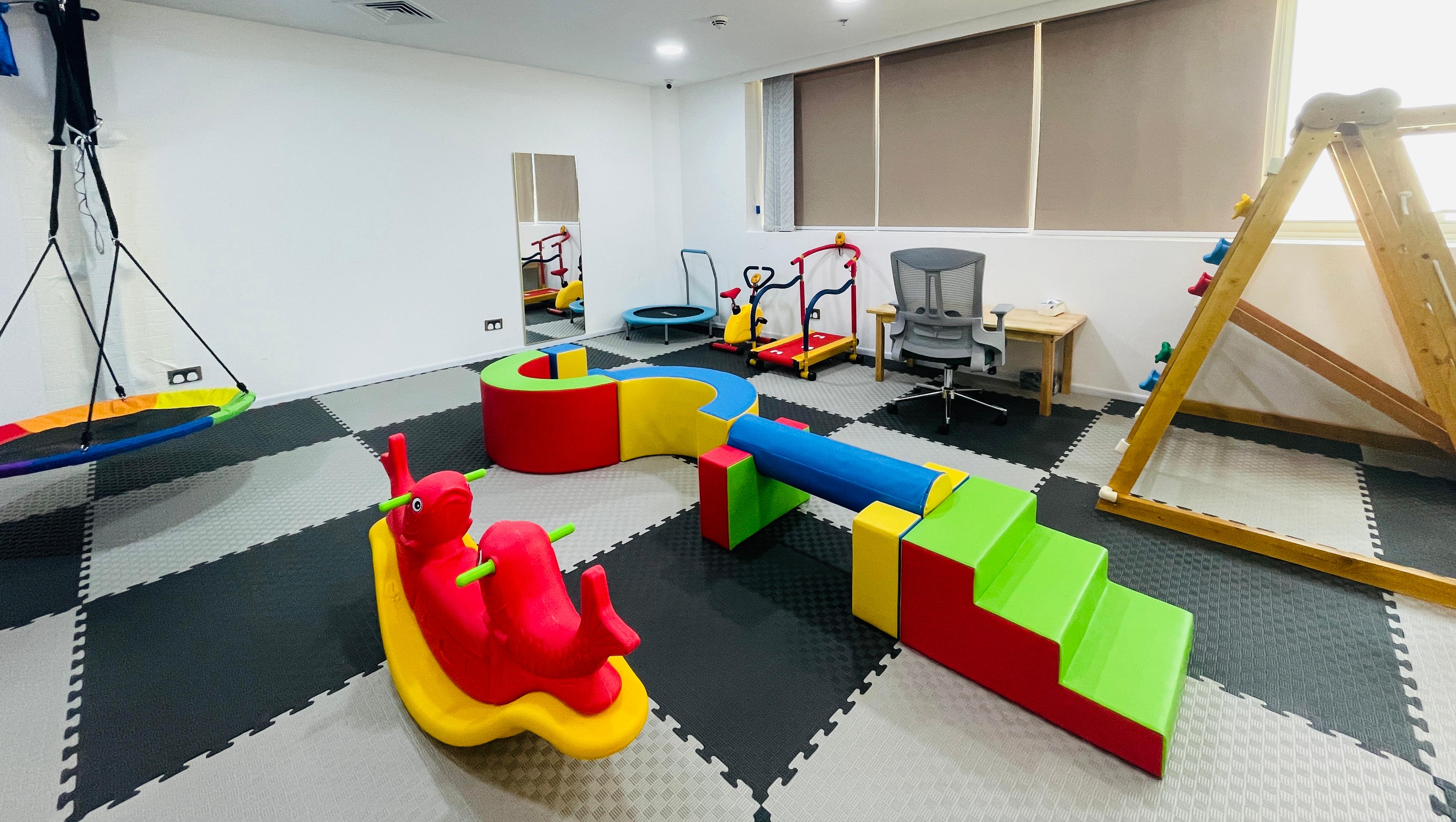
Why Play Is the Heart of Occupational Therapy for Children
When children play, they are not “just having fun.”
They are learning, exploring, communicating, and making sense of the world around them.
In occupational therapy (OT), play is one of the most powerful and effective therapeutic tools especially for neurodivergent children, including children with autism spectrum disorder (ASD) and sensory processing differences. Play feels safe, natural, and motivating, making it the ideal foundation for growth and development.
Play: A Child’s Natural Way of Learning
Children do not learn best by sitting still or following rigid instructions.
They learn by moving, touching, experimenting, and imagining, and play allows all of this to happen organically.
Through play, children naturally develop skills across multiple areas:
🧠 Body & Movement Skills
Active play such as running, climbing, jumping, and crawling helps build:
►Core strength
►Balance and coordination
►Body awareness and motor planning
💡 Thinking & Learning Skills
Activities like puzzles, pretend play, and building games support:
►Attention and focus
►Problem-solving abilities
►Flexible thinking and creativity
❤️ Social & Emotional Skills
Playing with others helps children practice:
►Turn-taking and sharing
►Emotional regulation
►Understanding their own feelings and the emotions of others
🌈 Sensory Processing Skills
Sensory-rich play, such as swinging, messy play, water play, or exploring different textures, helps children:
►Understand and organize sensory input
►Feel more aware of their bodies
►Reach a calm, alert state that supports learning
For many neurodivergent children, these sensory experiences are not optional; they are essential. A regulated nervous system is the foundation for attention, communication, and connection.
Why Occupational Therapists Use Play in Therapy
In occupational therapy, play is how therapy happens and also what children are working toward in their daily lives.
Here’s why play is so effective in OT:
✔ Supports Emotional and Sensory Regulation
Specific play activities can calm an overwhelmed child or gently activate a child who appears low-energy or disconnected.
Examples include swinging, deep-pressure play, or water-based activities.
✔ Builds Skills Naturally and Meaningfully
While children are playing, they are also developing:
⇒Sensory processing skills
⇒Coordination and motor control
⇒Visual and spatial awareness
All of this happens without pressure, stress, or forced learning.
✔ Increases Motivation and Engagement
Children are more willing to participate when activities are enjoyable and meaningful to them.
When therapy feels like play, engagement improves and progress follows naturally.
✔ Builds Trust and Connection
For children who communicate differently, play becomes a shared language.
It helps build trust, emotional safety, and a strong therapist-child relationship, which is essential for learning.
What Therapeutic Play Looks Like in Occupational Therapy
To parents, OT sessions may look like “just play.”
But every activity is carefully selected with a clinical purpose.
Examples of therapeutic play include:
♦Sensory-motor play: Swinging, climbing, crawling, jumping
♦Pretend play: Cooking games, role-play, storytelling
♦Creative play: Drawing, crafts, building blocks
♦ Social play: Turn-taking games and cooperative activities
Behind each activity is skilled clinical reasoning supporting regulation, attention, communication, motor planning, and independence in a way that feels safe and enjoyable for the child.
The Takeaway for Parents
Play is not a break from therapy.
Play is therapy.
For neurodivergent children, play opens doors that structured teaching often cannot. It creates a space where children feel safe, confident, and capable.
Through play, occupational therapy helps children:
-
Feel secure and regulated in their bodies
-
Connect meaningfully with others
-
Build skills that support everyday life